
Infrastructure Study

Infrastructure Spending is Rising Around AI, Security and Cloud
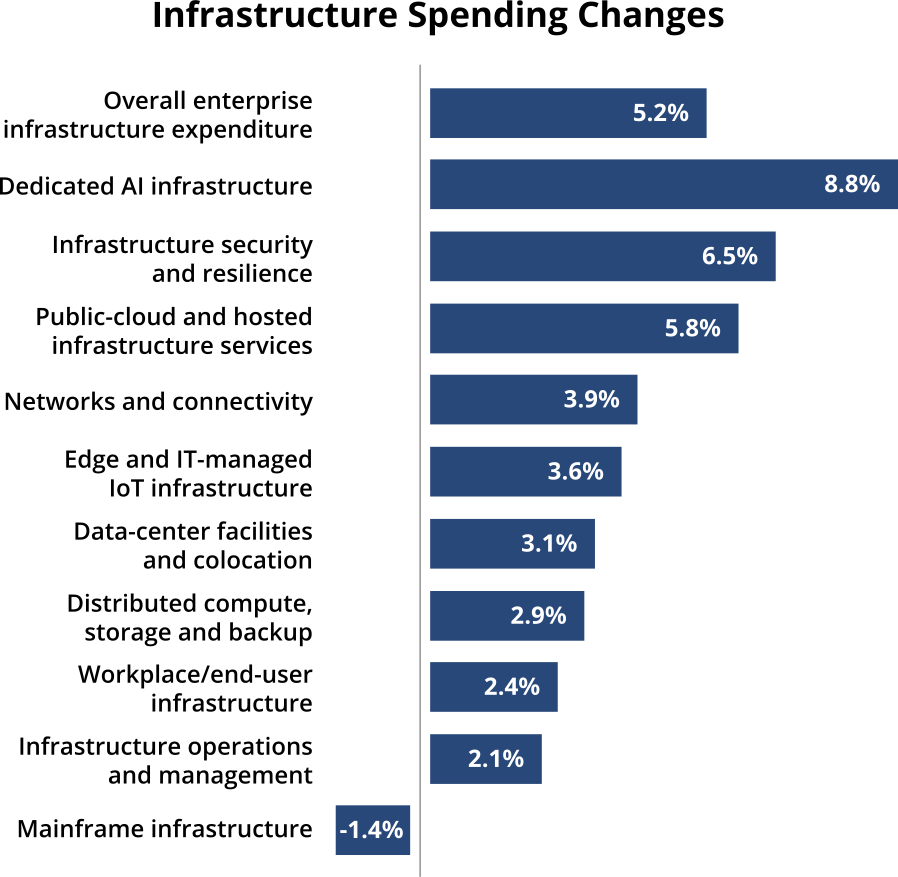
Enterprise infrastructure represents a significant share of IT investment. Organizations in the study allocate approximately one-third of their IT budget on average to enterprise infrastructure, underscoring its role as a core operating foundation.
Spending growth is expected to concentrate in areas tied to business resilience and future workloads. Dedicated AI infrastructure, infrastructure security and resilience, and public-cloud and hosted infrastructure services are among the areas expected to see the strongest expenditure increases through year-end 2028.
With Growing AI Demand, Capacity Constraints are Emerging
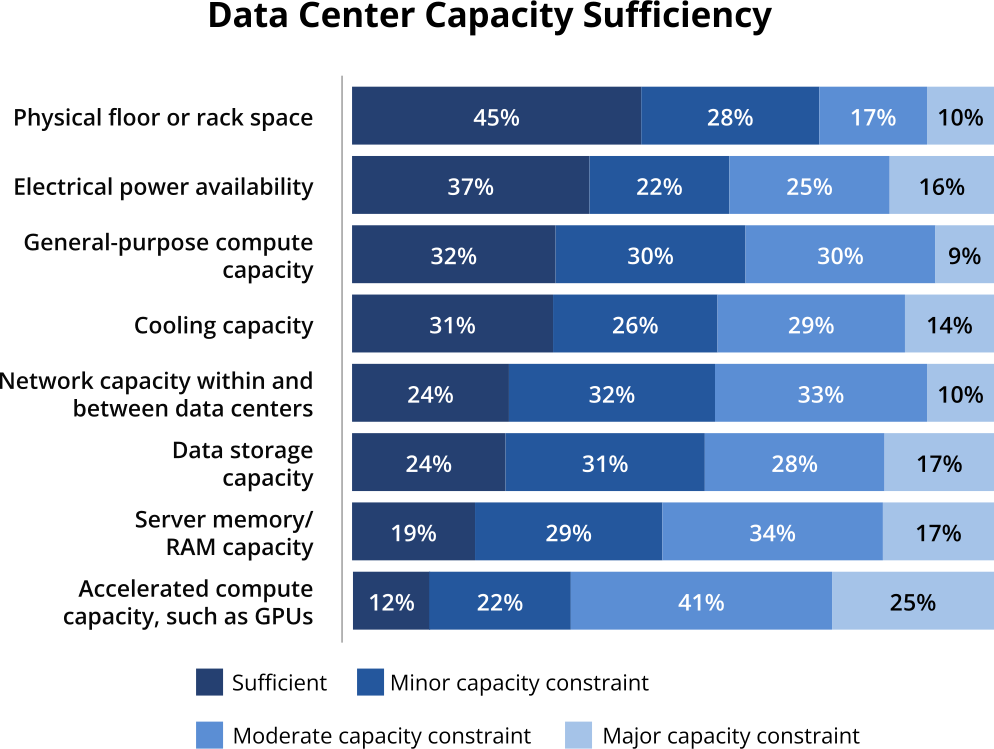
AI is changing the infrastructure capacity conversation. Organizations are not only planning for general compute, storage and network requirements. They are also preparing for more specialized needs tied to accelerated compute, electrical power, cooling and data center capacity.
The most acute constraints appear where AI demand is most infrastructure-intensive. As organizations scale AI workloads, capacity planning must account for GPU availability, power, cooling, data storage and the ability to source capacity through internal, cloud, hosted or external infrastructure providers.
External Providers Remain Central to the Infrastructure Operating Model
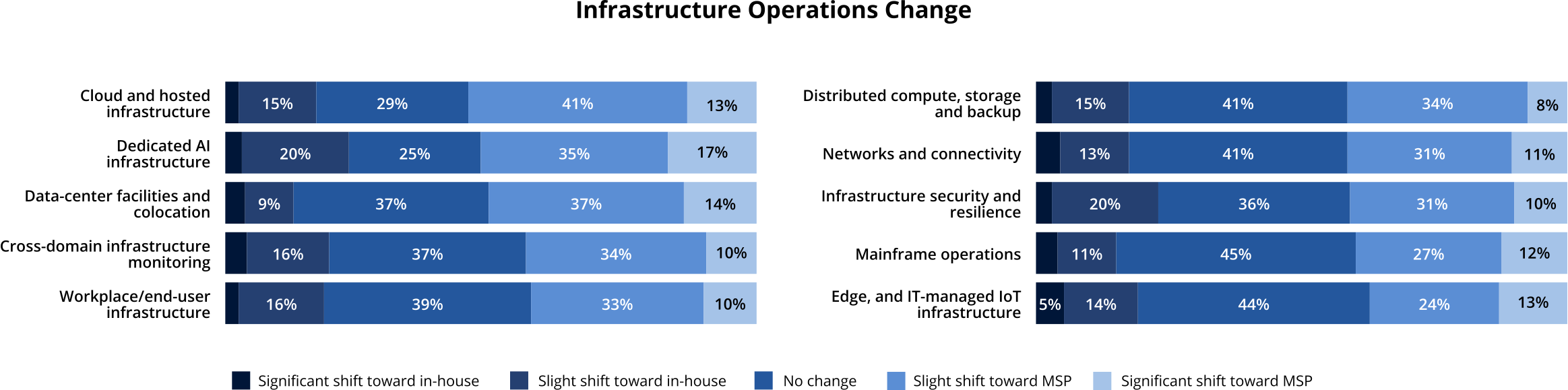
Infrastructure operations are not moving in one direction across all domains. Some areas remain stable, while others show a clear shift toward greater use of external providers and managed services providers.
Cloud and hosted infrastructure, dedicated AI infrastructure, data-center facilities and cross-domain monitoring are among the areas where organizations expect external providers to play a larger role. The sourcing conversation is shifting from simple outsourcing to finding the right operating model for resilience, capacity, cost control and specialized expertise.
AI-Enabled Operations Need Better Visibility and Operational Data
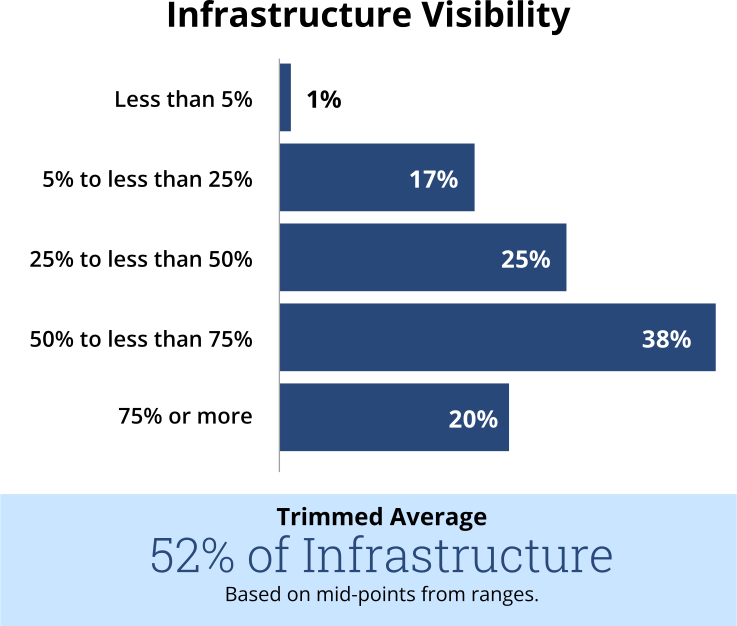
AI-enabled infrastructure management depends on the quality and completeness of the operational data foundation. Many organizations still have incomplete visibility across the infrastructure that supports critical business services.
Without stronger observability, automation and AI-enabled operations are harder to govern, trust and scale.