

AI Is Shifting Enterprise Software from Applications and Seats to Capabilities, Work and Outcomes
For two decades, enterprise software strategy has largely been an application and procurement story: select strategic platforms, negotiate licenses, manage vendors and control the application portfolio. That model is becoming insufficient.
AI is changing how software is built, consumed, priced and governed. Large enterprise platforms will remain essential, particularly for systems of record and regulated transactions. But intelligence, workflow and company-specific logic will increasingly sit outside those cores – in agents, orchestration layers and lightweight capabilities.
The implications for CIOs are big. Software strategy determines how the enterprise creates value, allocates capital and manages risk. The question is no longer simply which applications the enterprise should own. It is which capabilities should be standardized, where differentiation should sit, how autonomous execution should be governed and what the enterprise should pay for.
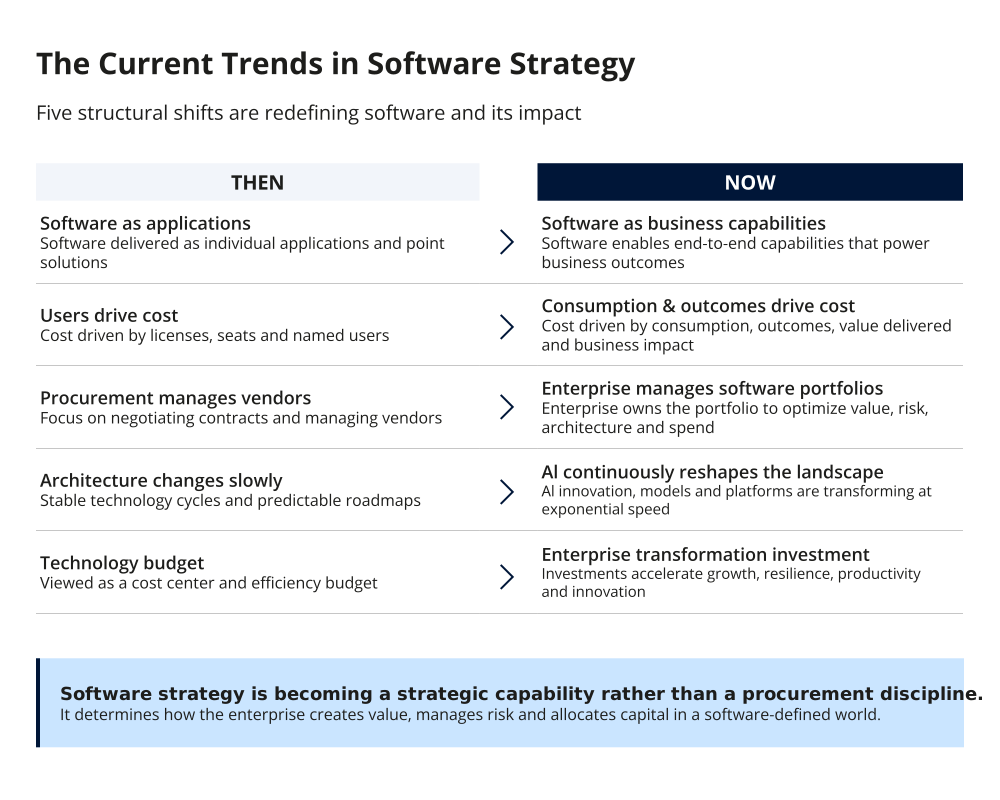
Value Will Move from Applications to Work and Outcomes
Historically, employees moved between ERP, CRM, planning, procurement and reporting applications to complete work. In an AI-enabled enterprise, users may increasingly interact with workflows and agents that draw data and actions from several systems. The application becomes less visible; the completed outcome becomes more important.
That changes the unit of value. Enterprises will need to decide whether they are buying users, transactions, capacity, AI consumption, tasks, business outcomes – or a combination of these. They will also need to prevent vendors from charging several times for the same value through base licenses, AI assistants, tokens, agent transactions, APIs and premium modules.
Software economics, therefore, need to move closer to work-unit economics. A capability that looks expensive against the software budget may be attractive when measured against the total cost of the work it performs. Conversely, a low-cost AI tool that produces little measurable business value is not inexpensive – it is waste.
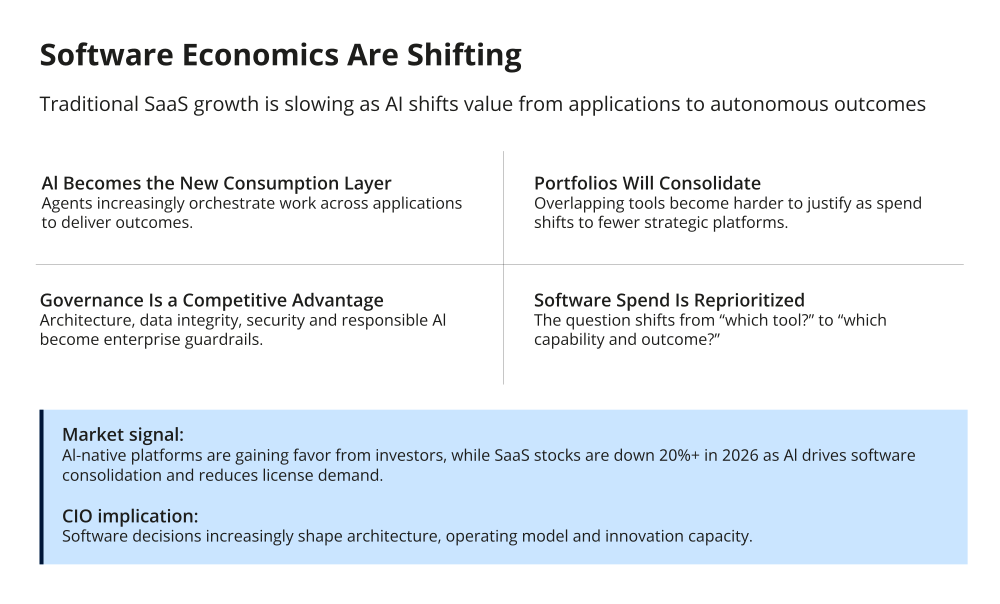
Seat-Based Pricing Will Weaken – but Software Costs May Rise First
As agents perform more work, employee headcount becomes a weaker proxy for software value. Seat-based pricing will not disappear overnight, but vendors are already adding new forms of consumption and AI pricing on top of traditional subscriptions.
This creates a transition risk: enterprises may pay simultaneously for the old software model and the new AI model. Strong commercial governance is therefore essential. Organizations need explicit policies for AI pricing, consumption caps, usage forecasting, cost allocation, benchmarking, auditability and the treatment of model and token costs. The objective is not merely a lower unit price. It is to ensure that software spend follows value as the unit of consumption changes.
The Make-versus-Buy Decision Will Become Make-Buy-Extend-Agent
AI-assisted development lowers the cost of creating specialized software. Code, interfaces, workflows, testing and documentation can increasingly be produced with AI support. That makes smaller, enterprise-specific capabilities economically viable.
It does not mean enterprises should replace robust systems of record with internally generated AI applications. Mission-critical platforms still need reliability, security, auditability, data integrity and long-term support. The better strategy is more nuanced: buy and standardize the core, configure before customizing, extend where differentiation or regulation requires it, build lightweight capabilities where commercial software is excessive and use agents for intelligence and orchestration.
The result should be a cleaner core – not an ideologically pure one. Every exception should be visible, governed, supportable and economically defensible.
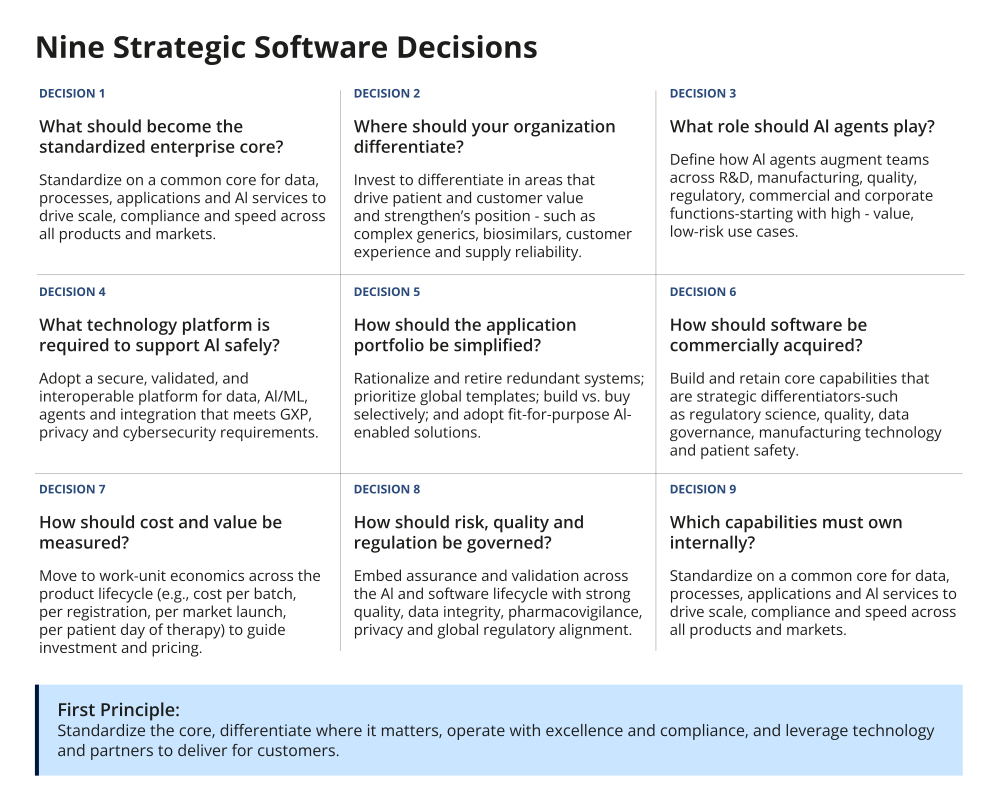
Agents Will Become a New Enterprise Layer – and a New Source of Sprawl
Agents are likely to become an important interface and execution layer across the enterprise. But an information assistant is fundamentally different from an autonomous capability that can modify a financial, operational or regulated transaction. Autonomy must therefore increase deliberately, with controls matched to the risk of the action.
There is also a portfolio risk. AI may eliminate some narrow SaaS applications while creating hundreds of agents with separate owners, models, data access, prompts, policies and failure modes. Enterprises could replace SaaS sprawl with agent sprawl.
The number of agents is not a useful success metric. Production agents should be treated as governed enterprise assets with clear ownership, approved data sources, risk classification, evaluation tests, cost monitoring, incident procedures, value metrics and a retirement trigger.
Data and Integration Will Become Strategic Control Layers
AI increases the value of enterprise data – and the damage caused by poor data. An agent can combine information from several systems, make a recommendation and initiate an action at machine speed. Data-quality problems that were once contained can therefore become scalable operational errors.
Software strategy and data strategy can no longer be separated. Enterprises need authoritative sources, named data owners, quality thresholds, lineage and permitted uses for critical data. They also need a governed integration and action layer that controls how agents access data, business rules, transactions and workflows.
This layer is not simply middleware. It becomes a control boundary. The enterprise should be able to determine what initiated an action, which data and model were used, what policy authorized it, whether a human approved it, what changed and whether the action can be reversed.
Software Procurement Must Become Portfolio Management
License negotiation and renewal management remain important, but they are no longer enough. Software portfolios now need to be managed simultaneously for capability, architecture, value, risk, data, AI functionality, consumption, vendor dependence and exit exposure.
This requires cross-functional governance. Business, technology, enterprise architecture, procurement, finance, data, security and risk functions need a shared view of which capabilities should be funded, standardized, consolidated or retired. Procurement tools and cloud marketplaces can improve execution, but they cannot determine strategy.
The same applies to strategic vendors. Major software and cloud providers increasingly want to own more of the enterprise control plane – identity, data, models, workflows, integration and purchasing. Enterprises should define deliberately where concentration creates value, where competition must remain and where interoperability and replaceability are non-negotiable.
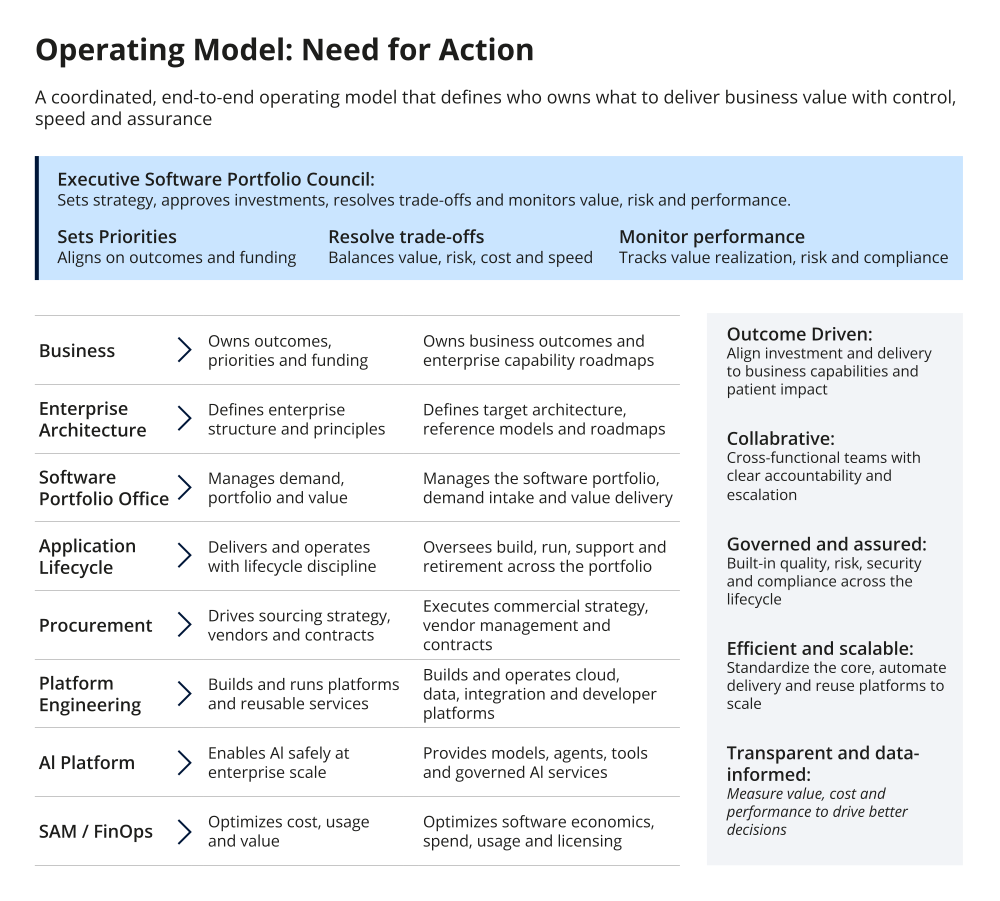
Turn Software Strategy into an Executive Agenda
The most effective software strategies will not start with a preferred vendor, marketplace or AI tool. They will start with enterprise evidence and a small number of deliberate choices.
A practical agenda for CIOs is:
-
Build the fact base: Baseline applications, spend, usage, renewals, duplication, technical debt, customization, data fragmentation, AI pricing exposure and vendor concentration.
-
Define the target architecture: Decide what belongs in standardized systems of record, shared data and integration platforms and differentiated business or agentic layers.
-
Reset software economics: Move beyond license TCO toward the cost and value of the work performed, while controlling duplicate AI and consumption charges.
-
Govern autonomy as a portfolio: Define levels of autonomy, assurance requirements and ownership for every production AI-enabled capability.
-
Create cross-functional software portfolio governance: Give one executive forum responsibility for investment priorities, simplification, commercial strategy, risk and measurable value realization.
-
Sequence execution: Start with evidence and quick commercial wins, then rationalize the portfolio, simplify the core and scale only the AI patterns that demonstrate value and control.
Do Not Treat Software Strategy as a Procurement Exercise
The strategic mistake would be to treat the current disruption as a license-optimization program with AI added to it. The opportunity is larger. As software shifts from applications toward intelligent business capabilities, enterprises need to redesign the architecture, economics and governance of the software estate together.
The direction is clear: Standardize the enterprise core, differentiate where it matters, govern the layers between them and measure software by the business work and outcomes it enables. Vendor and channel choices should follow from that strategy – not define it.
The call to action is now. Decisions being made in today's renewals, platform commitments and AI programs will shape the enterprise software landscape for years. The greatest risk is not that AI makes today's applications obsolete. It is allowing tomorrow's operating model to inherit today's software complexity, commercial assumptions and lock-in.
Please fill out this form to continue.
About the author