

Join ISG’s CMO, Paul Gottsegen, as he interviews ISG Advisor, Prashant Kelker, about enterprise agility trends and predictions for 2022, especially the ones most people have missed: agile financial operations and architecture.
Transcript:
Prashant
We are seeing a trail of moving away from large ERP programs to – like we discussed earlier – continuous transformation in this angle and partners play a huge role in this.
Paul
How do you make it there?
When we think about the technology stack and the processes at any organization, how do you become more agile so that you have the wherewithal to transition to this continuous mindset, or as you're making changes to what seems like a consumer experience interface. Like you said, with the curbside pickup, you have to be very agile to changing your backend, because it's really mainly a backend order management. Or invoicing or whatever issues.
So, talk a little bit about enterprise agility. I know it's a topic that comes up with a lot of our client base, and you have a lot of experience talking to leaders about this. What can you tell us about what you're seeing?
Prashant
Oh, that's a lovely question, Paul. Actually, let me use this question to go beyond what is being spoken about in the press. The press talks about organizational agility in in the form of culture. And I want to tick that box and move on to the topics that are not spoken about – and that is financing and architecture.
The best strategy of organizational agility will be brought to its knees by the legacy architecture. You won't be able to move. So, if we can apply the word “agility” to how one should think architecture, one should think as de-layered as possible.
Now, thinking as de-layered as possible unfortunately means that ERP or software-as-a-service is not always your answer. The very fact that you can buy software for a process shows that every other organization is actually doing that process already. It's not going to differentiate you.
I think the world is a mix of SaaS, ERP and, like in the old days, bespoke development.
So, thinking architecture in terms of delayering because that delayering gives you the best flexibility. And you should also be doing very careful buy versus build, and not going too much towards buy. I think the innovativeness comes in the build part.
Now, if you want to bring this to life, you’ve got to start looking at how you think CapEx and OpEx, and that's where the finance part comes in. It’s the “how?”
- How do you go away from annual budgeting towards delayering continuously?
- How do you go from thinking of a budget for a program to doing agile sprints?
These are the new problems which interest us at ISG.
About the authors

Paul Gottsegen
As President, ISG Client Experience, Paul Gottsegen orchestrates the firm's global marketing, demand generation, branding and communications activity. He helped drive the firm to a leading position in AI and new technologies, and as a member of the ISG AI Acceleration Unit, helps ISG identify and capitalize on the opportunities they present. Over the course of his career, he has revitalized industry giants, including complete branding transformations at Mindtree and Infosys. Earlier, he shaped enterprise marketing strategies at technology powerhouses HP, Dell and Compaq. Paul holds a bachelor’s degree in computer science from Brandeis University and an MBA from The Wharton School. He is Board Chair of the Gastric Cancer Foundation.
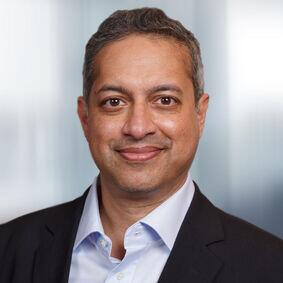
Prashant Kelker
Prashant Kelker is Partner, Americas Consulting, and Chief Strategy Officer. A globally recognized thought leader in AI and technology-led transformation, Prashant is shaping the firm’s strategic blueprint and bringing together all advisory capabilities to guide clients through the convergence of AI, digital technology and enterprise operating models.
He led the effort to make ISG the first sourcing advisory firm to establish a reference architecture for applied Generative AI with the 2023 ISG State of Applied Generative AI Market Report and played a key role in the development of our highly successful ISG NEXT operating model in 2020. Prashant joined ISG in 2012.
Before joining ISG, Prashant was a Technology Director at Accenture, where he won and established several new accounts and created digital offerings on mobility and predictive analytics. He earned an MBA from the Indian Institute of Management in Bangalore and a BE in Electronics from Bangalore University in India.
