

For the last decade, enterprises have been unwitting benefactors of the service provider’s bottom line. Under the banner of “digital transformation,” we have handed over the keys to our infrastructure to entities that view our complexity as their revenue stream. As we enter the era of artificial intelligence, the stakes have shifted. We are no longer just talking about “automation,” but about the “intent” of the network itself.
When an enterprise surrenders the intent of its network to a third party, it relinquishes nearly every strategic lever except one: cost optimization. And when cost becomes the only visible control surface, strategy collapses into procurement. Procurement discipline replaces architectural ambition. This reductionist mindset is the death knell for innovation.
Cost optimization becomes the dominant narrative not because it is visionary, but because it is the last visible control surface. This is the danger unfolding quietly beneath the current wave of AI enthusiasm. If enterprises do not deliberately shape their own AI narrative, they will spend the next five years subsidizing their providers’ R&D, funding the very intelligence that deepens opacity rather than delivering transparency.
The era of managed ignorance is ending. The question is whether enterprises will replace it with strategic observability or with a more sophisticated black box.
The Great Efficiency Heist; A History of Extracted Value
To understand the moment we are in, it helps to remember the last one. There was a time when network operations meant human intervention under pressure. Technical Assistance Centers hummed with urgency. “Severity 1” alerts signaled that revenue was leaking somewhere in the infrastructure. Engineers practiced what felt like digital heart surgery in the dark; navigating noise, time pressure and incomplete visibility.
Then came automation. Scripting engines, orchestration layers and repeatable workflows eliminated much of the manual burden. Provisioning accelerated. Errors declined. Mean Time to Repair dropped and operational expenditure shrank.
To the outside world, this was positioned as a revolution in customer experience. In reality, it was the first great transfer of leverage. Automation scaled provider margins. It reduced headcount requirements and compressed operational cost curves. For enterprises, however, the network did not become more transparent. It became quieter. The tickets arrived. The incidents were resolved, yet the root cause remained abstracted.
The strategic insight, the deeper forensic understanding of how and why the system behaved as it did, were accrued largely to the provider. Enterprises traded skilled artisans for efficient ghosts in the machine. The network became more stable, but not more transparent.
Today’s provider narratives are compelling: self-healing networks, predictive analytics and intent-based operations. AI promises to detect anomalies before outages occur, correlate signals across layers and remediate issues autonomously.
But here is the essential question: If AI integration does not change the power dynamic between enterprise and provider, is it truly innovation? Or is it simply cost optimization again?
Across the ecosystem, AI success is framed in operational terms: reduced downtime, faster remediation, autonomous resolution. These are real achievements. They improve resilience. They improve efficiency. But they are measured primarily within the providers’ domain.
Where is the explicit linkage to enterprise revenue? Where is the correlation to production throughput? Where is the real-time mapping between network behavior and customer experience degradation?
It is largely absent not because it lacks importance but because it is not the provider’s priority. The ecosystem optimizes operational KPIs within the network domain, while enterprises must live with the business consequences outside of it. Operational excellence that is invisible to the enterprise does not create strategic value. It creates dependency.
When a factory loses millions per hour due to downtime, or when digital checkout latency erodes conversion rates, marginal savings in connectivity contracts become irrelevant. If AI merely makes the provider’s internal operations more efficient while leaving the enterprise blind to causality, history will repeat itself. Then the second transfer of power will be complete.
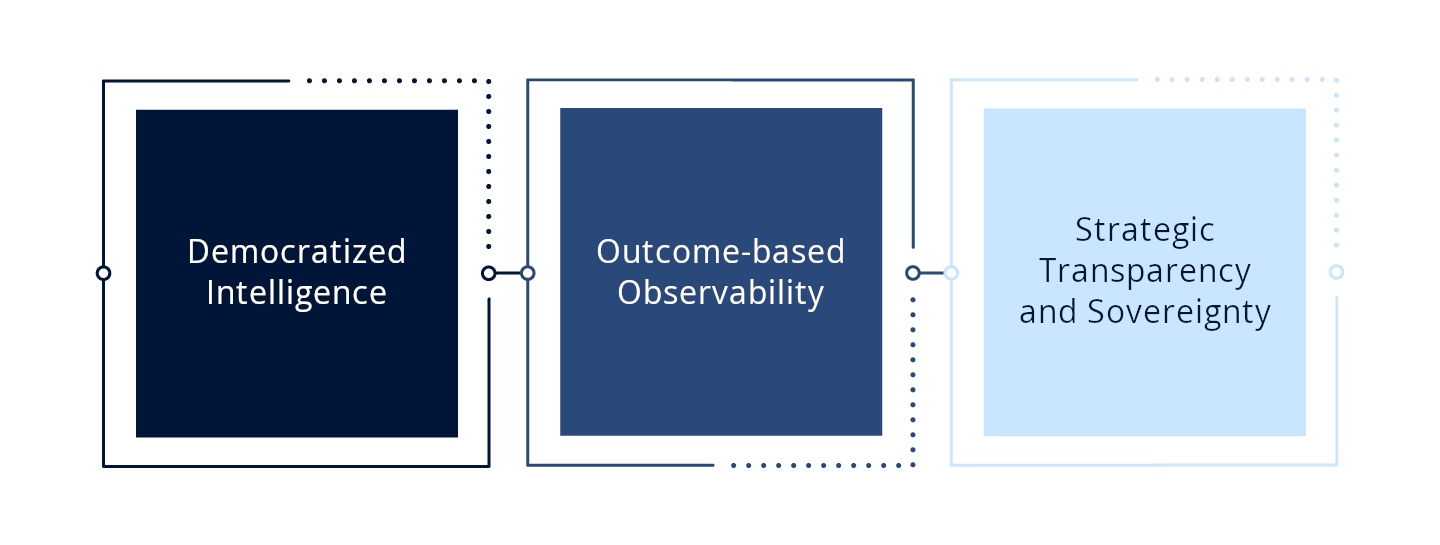
Figure 1: Strategic Pillars of the Network AI Playbook
Flipping the Script: The Anatomy of an Enterprise AI Playbook
Imagine standing in a darkened room, staring at a human body. In the dim light, you see only the silhouette; a vague, breathing shape. You know it’s alive because the heart beats, but you have no idea why the breath is shallow or why the left hand is trembling.
This is how most CIOs view their enterprise networks today: a vital, pulsing organism that is essentially a black box.
Now, imagine the lights flicker on but with a different kind of spectrum. Suddenly, the skin becomes translucent. You see the intricate web of the circulatory system, the deep crimson of the arteries pumping life to the extremities, the sapphire veins returning to the core. You see the nervous system, a silver lattice of nerves firing electrical impulses at lightning speed between synaptic nodes. You see the blockages before they cause a stroke; you see the friction before it becomes a fever. This is the promise that AI integration should seek to fulfill. It is not just about "fixing things faster." It is about achieving a level of physiological transparency where the network, the very lifeblood of your enterprise, is no longer a mystery managed by ghosts in a machine.
The true promise of AI in network operations is not faster ticket closure. It is physiological transparency, transforming the network from a black box into a glass box. Imagine an environment where AI does not simply report that a link experienced packet loss. Instead, it correlates with a 0.5-millisecond latency spike that triggered safety stops in autonomous guided vehicles, resulting in a measurable drop in production throughput. It quantifies the revenue impact avoided because corrective action was initiated preemptively.
To derive tangible, sovereign business value, AI integration in network operations must undergo a radical philosophical shift. It must move beyond the provider’s obsession with the TAC engineer's efficiency and ascend to the realm of business physiological observability. True AI integration should turn the black box into a glass box of operational and business insights. AI must become the diagnostic imaging for your smart factory’s central nervous system not another dashboard.
Your enterprise AI Playbook must be built on three non-negotiable pillars:
- Democratized intelligence: AI-derived insights must be expressed in the language of the business. Revenue impact, user satisfaction, production yield and transaction latency. If intelligence remains confined to backend dashboards filled with technical telemetry, it will never influence executive decision-making. The CFO should understand the network’s pulse as clearly as the network architect. When intelligence is democratized, it becomes strategic.
- Outcome-based observability: Traditional monitoring asks: “Is the port up?” Enterprise network AI must ask: “Is the sales pipeline flowing without friction?” “Is the supply chain synchronized in real time?” “Is collaboration latency impacting design or logistic delivery cycles of AGVs?” The network is not the end. It is the circulatory and nervous system of digital business. Observability must move from infrastructure metrics to business outcomes.
- Strategic transparency and sovereignty: Enterprises must possess forensic visibility equal to that of their providers. This requires ownership of telemetry, access to AI-derived insights and explainability in how decisions are made. AI systems should not only detect risk; they should articulate diagnosis, impact and preventative action. The conversation shifts from “Why did this happen?” to “Here is what almost happened and here is how it was prevented.”
The drama for the next five years won't be about who has the fastest AI model or the most training data. It will be about who owns the intent. Who defines what "good" looks like? And if an enterprise isn’t doing that, its provider will define it for them.
The Drama of Choice: Subsidizing R&D or Funding Your Future?
Enterprises need to be careful not to allow their network AI strategy to be dictated by the enthusiasm of the market. Pre-packaged, closed-loop AI solutions need to bring real, specific business value. Contracts without significant enterprise input will essentially result in subsidizing your provider's R&D while receiving a depreciating utility in return. You will be funding the very ghosts that obscure your view.
However, defining AI as a tool for sovereign transparency and business alignment will help reclaim the network as a strategic asset rather than a necessary evil. You will shift from being a consumer of managed ignorance to an orchestrator of informed intelligence.
The era of the “black box” managed by a silent script must end. It’s time to demand a network that doesn't just work in the dark, but one that speaks your language in the light.
Turning philosophy into practice requires deliberate action. It requires a new anatomy where you imagine your enterprise not as a black box, but as a living organism and the network as its circulatory and nervous system. Today, you see only the silhouette. With AI correctly integrated, it should make the skin translucent, revealing the arteries, veins and synaptic firings. You will see the clot forming in the logistics artery before the limb of your supply chain goes numb. You will sense the inflammation in the CRM application synapse before the sales team loses a quarter.
These steps will help turn this philosophy into practice:
- Negotiate for data sovereignty: Every RFP and contract renewal should stipulate real-time access to telemetry and AI-derived insights via open interfaces. Network intelligence should not be a proprietary artifact.
- Build a glass-box SLA: Move beyond up-time guarantees. Demand explainability. Providers should articulate what risk was detected, how it was diagnosed and what business impact was avoided.
- Design for vendor-agnostic intelligence: Ensure AI layers operate across multi-vendor and multi-cloud environments. Intelligence must not be tied to a single hardware ecosystem.
- Pilot enterprise-level observability: Deploy AI capabilities that sit above the provider stack. Correlate network events directly to business KPIs. Build your own glass box—or require your provider to build it with you.
These are not procurement tactics. They are strategic safeguards.
It would be both unfair and strategically lazy to frame the coming AI transition as an inevitable zero-sum game between enterprises and their providers. The future is not preordained. The same AI that can deepen opacity can, if wielded deliberately, dismantle it. This transformation need not be adversarial.
So, what does this mean for providers that want to be part of this future? There is a path where providers do not become ghosts in the machine but the architects of shared intelligence.
A Different Path for Providers: From Managed Networks to Shared Intelligence
As enterprises reclaim intent and visibility, a new form of provider differentiation becomes a possible one not built on opacity but on shared intelligence. The next era will not be won by those who hide complexity best but by those who help illuminate it responsibly.
Most providers today speak about AI in the familiar language of automation, such as self-healing loops, reduced MTTR and autonomous remediation. These are real achievements, but they are only half the story. Efficiency alone does not build trust, and invisibility does not create differentiation. As enterprises reclaim intent and visibility, they will need providers that offer shared intelligence and illuminate complexity responsibly.
A different philosophy starts with a simple principle. If AI is to truly create value, the enterprise customer should be able to see it, understand it and trust it. This is not about surrendering operational control. It is about abandoning the reflex that intelligence must remain hidden to remain valuable.
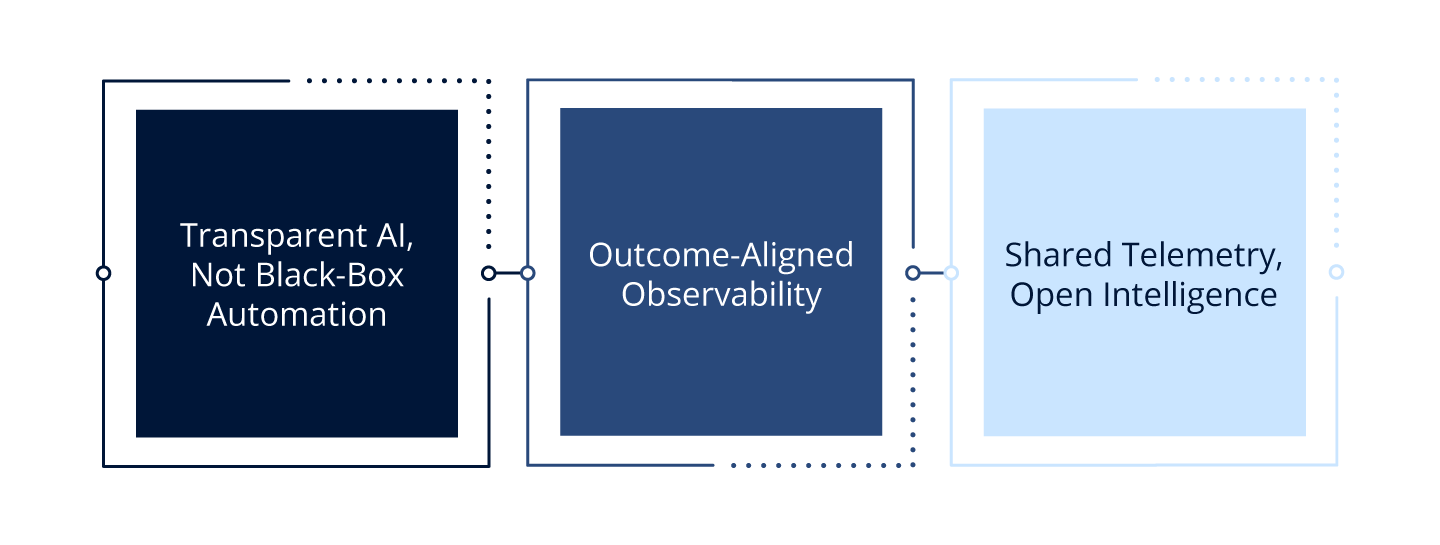
Figure 2: Conceptual Architecture for Shared Intelligence
In this model, AI does not end the enterprise-provider conversation with “incident resolved.” It begins with a better one where the provider’s AI explains: what risk was detected, how it was diagnosed, what business impact was avoided and what preventative action was taken. A provider must build network AI solutions that focus on outcome-aligned observability so AI correlates network behavior to what actually matters to the enterprise: application performance, transaction latency, user experience and revenue-critical workflows.
This reframes the enterprise-provider relationship. The discussion is no longer about ports and packets, but about outcomes and intent. The provider is no longer selling uptime; it is co-owning business continuity.
The most mature expression of this model moves beyond reactive SLAs entirely. Instead of reporting on what broke, it should report on what almost broke; predictive risk alerts, preventative actions taken and quantified business impact avoided, so that failure becomes rare, surprise becomes rarer and trust becomes structural. In a world where networks are the nervous systems of enterprises, the most valuable partner is not the one who operates silently in the dark, but the one who helps turn the lights on without blinding the patient.
Designing Your Network AI Future Starts with Intent
The integration of AI into network operations is no longer a question of capability but of intent. One future leads to a more efficient yet more opaque ecosystem, where intelligence operates silently, value is inferred but never seen and enterprises remain dependent on outcomes they cannot explain.
The providers who will win the next decade are not those who hide complexity best but those who illuminate it responsibly.
The other future is harder but far more durable. It is one where enterprises reclaim visibility and purpose, and where providers choose to differentiate not by hiding complexity, but by illuminating it responsibly. In this future, AI does not replace trust; it earns it through clarity, explainability and shared understanding. The network becomes more than infrastructure; it becomes a living system whose pulse is visible to all who depend on it. The technology to build this future already exists. What remains undecided is who will choose to wield it and to what end.
AI in network operations is advancing rapidly. But without clarity of intent, governance and outcome alignment, it risks becoming either another cost center or another opaque layer of complexity.
ISG helps enterprises reclaim visibility and sovereignty, translating AI ambition into a structured, outcome-driven playbook that connects network intelligence directly to business performance. Contact us to begin the conversation.
Please fill out this form to continue.
About the author