



The age of artificial intelligence (AI) has triggered a seismic shift in how organizations think about control, value and independence. As AI embeds itself in every layer of enterprise operations – from infrastructure to decision-making – the concept of technical sovereignty has become not only strategic but existential.
At its core, tech sovereignty is no longer treated as a legal checkbox. Rather it is the organization’s ability to own its digital destiny and its core business IP: deciding where its data lives, how algorithms are governed and who truly controls the levers of innovation. It is not isolationism. It’s autonomy with accountability. True sovereignty means achieving operational, architectural and contractual independence across data, cloud, infrastructure and AI ecosystems, ensuring that the digital embodiment of the business remains under the organization’s control.
In practical terms, sovereignty is about ensuring that your innovation does not rely exclusively on someone else’s infrastructure, roadmap or ethics. As AI models increasingly make decisions that affect business outcomes, brand trust and compliance exposure, sovereignty defines whether those outcomes are still yours to control.
Why Is There a Rising Urgency for Tech Sovereignty?
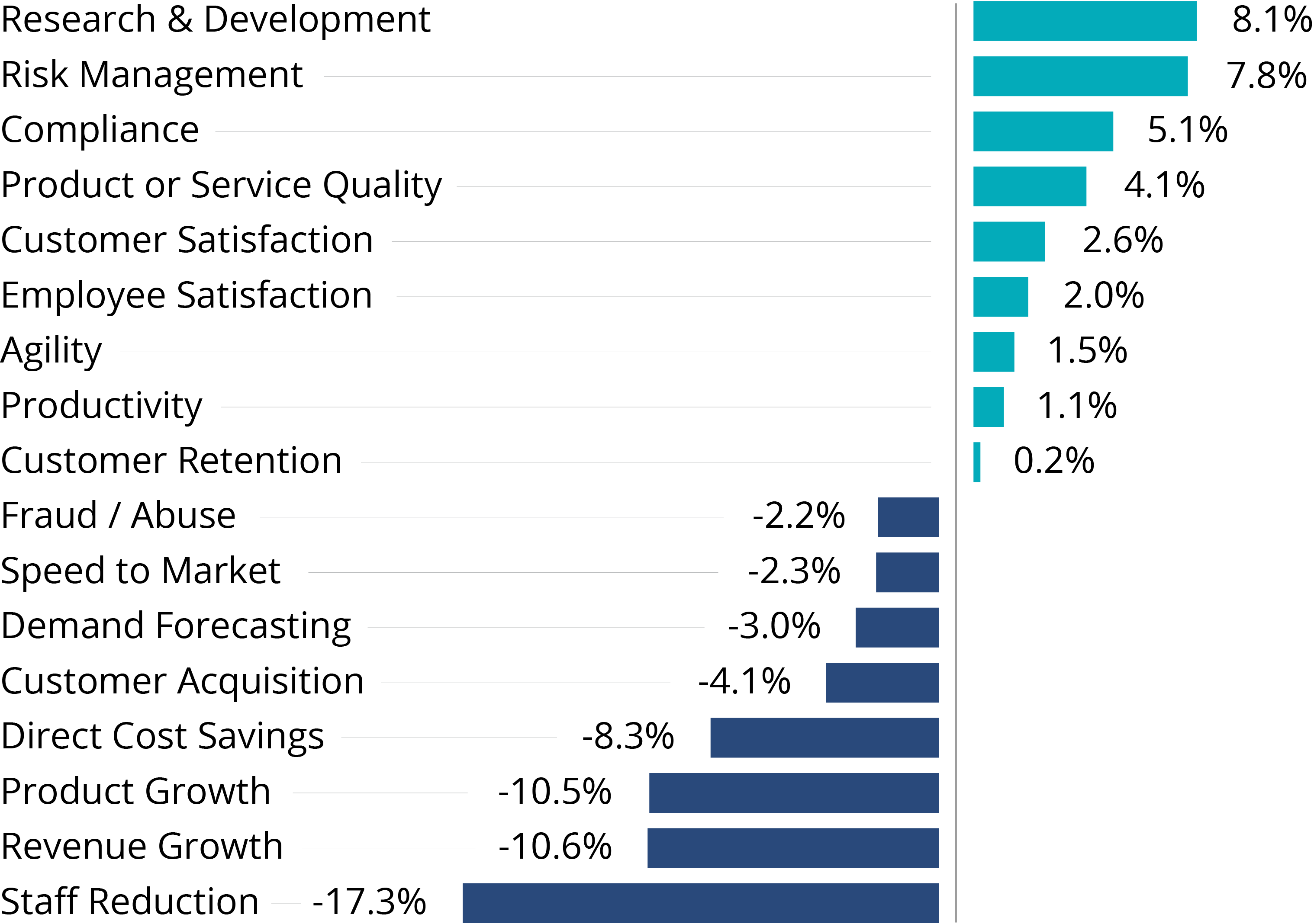
ISG’s 2025 State of Enterprise AI Adoption Report reveals how the sovereignty conversation is inseparable from the evolution of enterprise AI. As shown in Figure 1, 31% of AI use cases are now in full production – double the number in 2024 – signalling a rapid scaling of AI across industries. Yet only one in four initiatives meets expectations for revenue growth, with stronger results clustering around compliance and quality control.
This shift reflects a growing concern: as enterprises make heavy investments in AI, more of their core business IP and critical decision-making are moving outside the primary business and into external platforms, models and ecosystems. Not only does this create sovereignty risks, but it also helps explain the weaker and uneven returns. Without clarity and control over where core digital assets reside and how they are governed, AI value becomes harder to capture and sustain. This pattern highlights the importance of sovereign foundations – data, governance and ownership – as preconditions for sustainable AI value.
AI Use Case Metrics: Performace Relative to Expectations
Source: ISG Market Lens, State of AI, 2025, n—1,200 use cases
Figure 1: AI Use Case Metrics: Performance Relative to Expectations
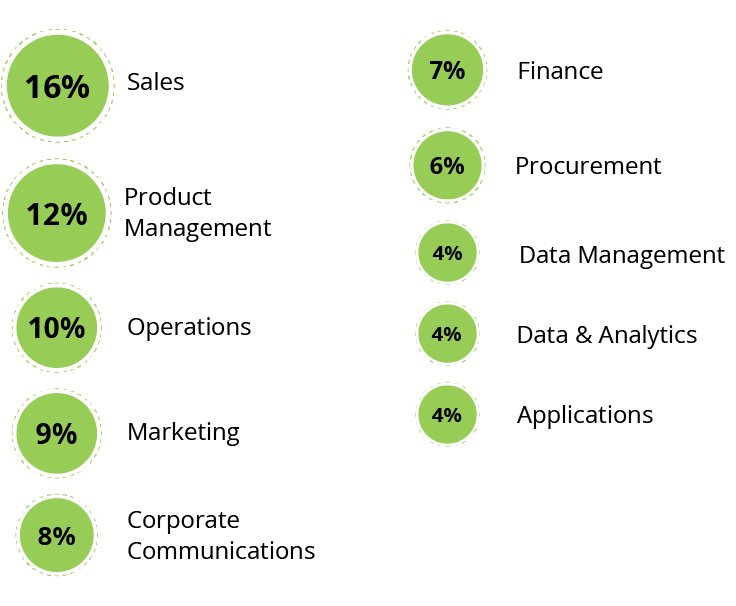
The data also show that AI investments are shifting closer to revenue-generating functions such as CRM automation, forecasting and sales enablement, now leading with 16% of enterprise AI use cases (Figure 2). These front-office applications require not only algorithmic intelligence but transparent governance, which is exactly what sovereignty enables.
Where Are AI Use Cases Being Deployed?
Source: ISG Market Lens, State of AI, 2025, n—1,200 use cases
Figure 2: AI Use Case Deployments
The urgency of tech sovereignty will intensify in 2026 for three converging reasons: regulation, resilience and responsibility.
Across Europe and beyond, governments are accelerating digital sovereignty legislation. The European Union’s AI Act, Data Governance Act, Cyber Resilience Act and the Digital Operational Resilience Act (DORA) for financial institutions form a lattice of accountability, pushing enterprises to know precisely where their data flows, how AI models are trained and who governs their use. This is not bureaucracy. It is a blueprint for sustainable digital ecosystems built on transparency and trust.
A central misconception still shapes many executive discussions: the idea that sovereign environments can guarantee absolute legal protection from foreign access. In reality, such guarantees do not exist. Sovereignty exists on a spectrum rather than as a binary state. It must be applied differently depending on the workload. At the same time, geopolitical and supply chain tensions have underscored the need for economic and technological resilience. Dependency on single vendors or hyperscalers exposes organizations to both commercial and jurisdictional risk. Control over data infrastructure is increasingly a matter of national competitiveness and corporate survival.
Finally, ethics and trust have moved to the forefront. In an era where AI can generate, decide and act autonomously, enterprises are being held accountable not just for their data, but for the behavior of their algorithms. Increasingly, responsibility also extends to how organizations define and manage their use of technology and environmental resources. Sovereignty ensures that responsibility does not dissipate across opaque vendor ecosystems but remains anchored within the enterprise.
Please fill out this form to continue.
The Organizational Challenges: What Holds Enterprises Back
Achieving digital and AI sovereignty requires more than new technology. It demands structural reform, coherent strategy and new capabilities. Most enterprises struggle across three core dimensions:
1. Structural and Vendor Dependencies
Vendor and supply chain lock-in: Enterprises remain heavily dependent on non-sovereign cloud and AI providers, limiting visibility into data flows, model behavior and jurisdictional control. This dependency restricts portability and creates long-term exposure to provider policies and pricing.
IP dependency: While enterprises may own their data, the algorithms, models and even derived insights often remain vendor controlled. This creates a new form of digital lock-in, where innovation depends on someone else’s intellectual property and model logic.
Fragmented governance: Sovereignty requires unified oversight, yet accountability is often split between IT, legal, security and business units. In many enterprises, this fragmentation is compounded by multiple independent centers of excellence – data , AI, analytics, smart manufacturing and more – each operating with its own mandates and governance models. The result is weakened decision-making, slower responses to regulatory shifts and inconsistent enforcement of sovereign standards.
2. Regulatory and Strategic Misalignment
Compliance overload: The rapid expansion of GDPR, the EU AI Act, the Data Act and localization rules forces organizations into reactive compliance. Recent rhetoric, even from countries like Germany, suggests weakening certain requirements to accelerate innovation, yet these shifts do not necessarily foster or guide a clear path to sovereignty. Without automated governance or clear ownership, regulatory complexity continues to slow innovation instead of enabling it.
Strategic blind spot: Sovereignty goals are rarely embedded into corporate strategy, product design or digital roadmaps. As a result, teams make technology choices that optimize for speed or cost but inadvertently increase dependency and reduce long-term autonomy. The automotive sector offers a clear illustration: as software-defined vehicles gain dominance, much of the core IP, which was once rooted in mechanical engineering, now sits in software platforms, batteries and external ecosystems. Companies that failed to anticipate this shift are now struggling with deep dependencies and eroding competitive control.
3. Capability and Culture Gaps
Capability isolation: Rather than a pure talent shortage, many enterprises struggle with isolated capabilities spread across disconnected teams and centers of excellence. Skills in AI governance, ethics, compliance engineering and sovereign technology architectures often exist, but they are fragmented and under-aligned. Without integrated operating models to bring these capabilities together, enterprises default to vendor-managed solutions, undermining sovereignty objectives.
Cultural resistance: Teams often prioritize convenience and speed – “whatever works now” – over autonomy and control. Compounding this is a lack of product-oriented thinking: many roles are not clearly aligned to how they contribute to the core business, making it harder to anchor decisions in long-term value and sovereignty goals. This mindset makes it difficult to implement governance rigor or shift to sovereign-by-design architectures.
Overcoming the Challenges: Building the Foundations of AI Sovereignty
AI is now deeply embedded across the enterprise value chain, from the data that fuels decisions to the models that generate insights and the cloud infrastructure that keeps systems running. As organizations scale these capabilities, sovereignty becomes the foundational requirement that ensures AI is not only powerful, but also controlled, transparent, compliant and resilient.
To help clients overcome structural, regulatory and capability challenges, ISG applies a six-pillar sovereignty framework that spans the entire digital stack.
Data Sovereignty
Organizations need full visibility and jurisdictional control over where data is stored and how it moves, ensuring EU-aligned hosting, complete lineage and compliance with GDPR and the Data Act.IP and Model Ownership
Enterprises must retain ownership of models, embeddings, training assets and outputs, supported by strong IP rights and licensing clarity to avoid vendor lock-in.Infrastructure and Cloud Sovereignty
A sovereign AI foundation requires diversified, portable architectures that reduce reliance on non-EU providers and maintain continuity amid platform, contract or geopolitical shifts. ISG’s Provider Lens study on sovereign cloud infrastructure services in Europe highlights clear patterns in adoption and provider positioning. Key insights from the study show how the market is evolving in practice. Adoption is being led by industries with the highest regulatory and trust requirements, including financial services, healthcare and the public sector. At the same time, European telecom operators and infrastructure specialists are strengthening their role, often acting as complements to hyperscalers through partnerships and joint ventures and, in some cases, positioning themselves as alternatives.AI Governance and Compliance
Sovereign AI demands transparent, explainable and auditable systems aligned to the EU AI Act, with enforced human oversight and clear accountability.Operational Resilience and Security
AI systems must withstand cyber threats and disruptions through strong security controls, continuous monitoring, NIS2/Cyber Resilience Act alignment and fail-safe recovery mechanisms. Together, these forces redefine sovereignty as an architectural requirement embedded directly into system design.People and Ecosystem Alignment
Sovereignty relies on skilled teams and aligned partners, ensuring internal capabilities and external suppliers consistently uphold EU-sovereign standards across the value chain.
The EU Digital Sovereignty Ecosystem: What Enterprises Must Know
To achieve sovereignty, organizations must operate within a fast-evolving European regulatory framework that governs data, infrastructure and AI. As shown in figure 3, together these regulations form the backbone of Europe’s digital sovereignty model.
European Data Strategy
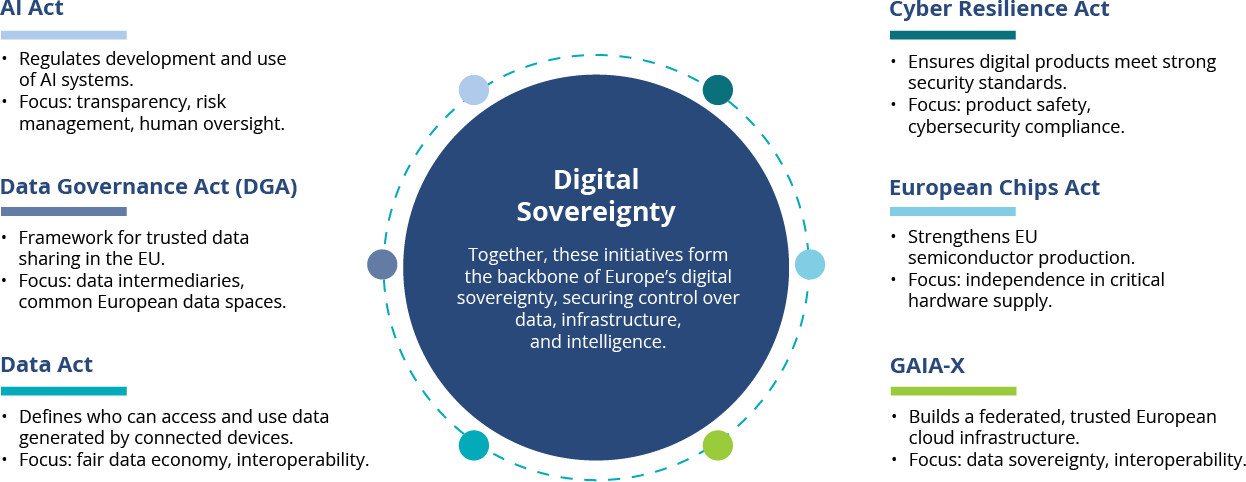
Figure 3: EU Digital Sovereignty Ecosystem
Most organizations overestimate their sovereignty readiness. ISG’s Tech Sovereignty Maturity Check evaluates the enterprise across the six pillars, from low maturity to high maturity. The framework helps assess organizational control, transparency and resilience across digital ecosystems. It is important for organizations to identify their position and define actionable steps toward operational autonomy.
At the same time, there is no single dominant approach. Providers are pursuing distinct design philosophies. Some emphasize deep security capabilities such as confidential computing and encryption. Others focus on integrating governance policies across hybrid environments. Certain models prioritize strict jurisdictional separation through dedicated legal and operational structures, while others emphasize deterministic infrastructure behavior and tightly controlled data handling.
In practice, the real differentiators lie in the technical details. Metadata handling, telemetry routing and AI governance determine how much transparency and control enterprises can realistically achieve.
The New Basis of Digital Competitiveness: Sovereignty as Strategy
As AI becomes the engine of business value, sovereignty is emerging as a cornerstone of long-term organizational resilience. Competitiveness now depends not just on adopting advanced models or cloud platforms, but on an enterprise’s ability to control its data, own its IP, govern its AI and operate securely across borders.
Sovereignty is not about withdrawing from global digital ecosystems, it is about participating on your own terms, with clarity, transparency and accountability. Organizations that think holistically across the six pillars of sovereignty will be best positioned to innovate confidently, manage regulatory complexity and protect the digital assets that define their future.
ISG helps enterprises turn this vision into action. Through our AI Sovereignty Framework, we guide organizations in assessing their maturity, aligning strategy and governance, and building sovereign-by-design capabilities that ensure AI is powerful, explainable, ethical and firmly under organizational control.
Are you ready to build sovereign, resilient and future-ready AI foundations? Let’s co-create your roadmap from compliance and control to measurable performance and sustainable value.
About the authors

Dr. Dorotea Baljević
Dorotea Baljević is a Director within the AI Acceleration Unit, enabling clients in their business, AI and data transformations while delivering value across the entire ecosystem.
Dorotea provides support and counsel to customers in their current and future digital journeys. Particularly focusing on improving and enhancing data and AI capabilities for the decision-making ecosystem to ensure healthy organisational longevity and relevance. This includes a focus on value driven outcomes, responsible use of data and AI, and shaping authentic and right-size solutions that align to the clients current and strategic needs.
Her spectrum of experience includes innovation, green-field environments, existing transformations (including building high performing teams), governance, regulatory preparation and compliance, development of digital threads and decommissioning.

Nivesha Parwar

Heiko Henkes
Heiko Henkes serves as Managing Director and Principal Analyst at ISG, where he oversees the global ISG Provider Lens® program for Digital Infrastructure and Intelligent Operations and cloud- and AI-related ISV ecosystem studies. He is responsible for the strategic development and global expansion of the ISG Provider Lens® portfolio, analyst leadership and talent development across regions.
Additionally, Henkes drives the digital and AI transformation of the global ISG Provider Lens® program and acts as a strategic liaison between ISG’s research, advisory and sourcing organizations.
His expertise focuses on helping enterprises and technology providers translate emerging technologies into scalable business strategies, operating models and transformation initiatives. He is particularly recognized for his perspectives on cloud, AI, intelligent operations, digital sovereignty and ecosystem-driven innovation. As a keynote speaker and advisor, he regularly shares fact-based insights on how organizations can build resilient, adaptive and future-ready business foundations.

Meenakshi Srivastava
Meenakshi is a Lead Analyst at ISG Provider Lens™, where she specializes in the rapidly evolving digital infrastructure landscape. Her research focuses on the intersection of private, public, and hybrid cloud services, alongside the global data center outsourcing market. With a rigorous approach to quantitative analysis and market benchmarking, Meenakshi evaluates service providers across the U.K., the Nordics, and the broader EU. She is responsible for identifying competitive differentiators and assessing how provider portfolios align with regional regulatory and technical requirements. Her current research interests include the intersection of AI, sovereign cloud, and next-gen data center strategies.
