

The global contact center market continues to grow, driven by the increasing number of customer interactions and rising service expectations. As engagement preferences evolve, organizations have an opportunity to strengthen customer relationships and enhance brand recall.
While leaders understand that strong customer connections drive growth, many struggle to realize their customer experience (CX) vision. In 2026, the industry is transforming. AI, analytics and automation – combined with greater understanding of the impact of human empathy – are redefining customer experience.
Why Contact Centers Must Evolve
Enterprise contact centers have long struggled with operational inefficiencies, rising customer expectations and increasing technological complexity. These forces are pushing organizations to rethink how contact centers operate – not as isolated service functions, but as integrated, experience-led ecosystems.
The following key challenges make traditional contact center models no longer sustainable:
High agent turnover: poor tools and lack of support drive agent attrition and reduce productivity.
Omnichannel gaps: disconnected channels create inconsistent and fragmented customer journeys.
Technology complexity: legacy systems and poor integration hinder operational efficiency.
Siloed data: fragmented data limits personalization and slows down resolution times.
AI without foundation: lack of readiness and strategy reduces the impact of AI investments.
Inconsistent service quality: variability across agents leads to uneven customer experiences.
Remote and hybrid work: flexible work arrangements require modern collaboration tools.
Pressure to reduce costs: contact centers face pressure to be more efficient and demonstrate ROI.
Security and compliance: increasing data risks and regulations require stronger governance frameworks.
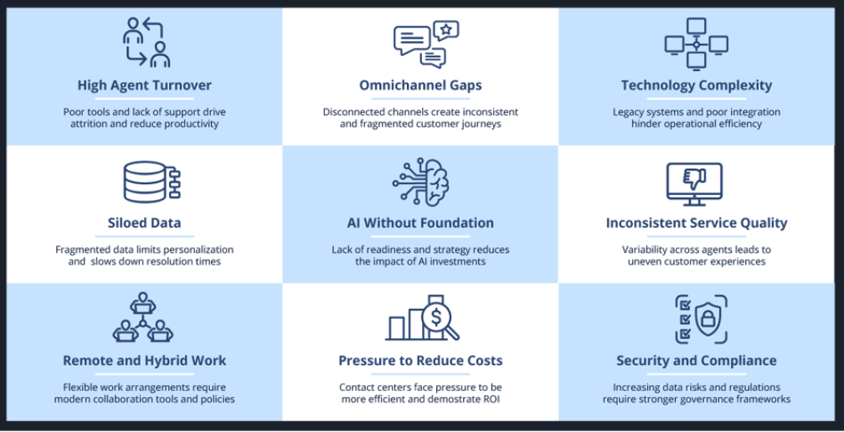
Figure 1: Major Challenges for Today's Contact Centers
How to Measure Contact Center Success
The contact center landscape is no stranger to change, but going forward, the pace of evolution will need to accelerate. Defining success solely by call volumes or resolution speeds is a thing of the past. Today, contact centers need to look at technology to improve efficiency, profitability and market competitiveness. The figure below depicts the shift in direction.
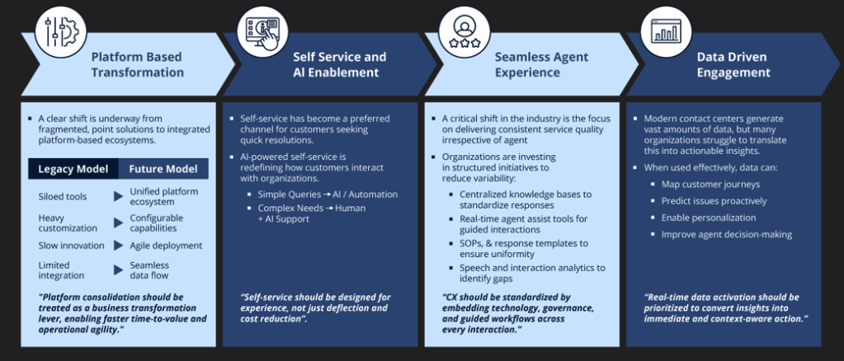
Figure 2: The Shift in Direction for Contact Centers
The Future-Ready Contact Center
Planning ahead has become an uphill task for enterprise leaders in an environment of rapid advancements in technology coupled with daily chores of contact center firefighting. Nevertheless, having a vision in mind assists leaders in crafting a strategy which helps them in achieving the goals that align with their overall vision.
AI as the Core Transformation Driver
AI adoption is accelerating across enterprises, with 92% organizations planning increased investments, however only 1% consider themselves AI-mature, indicating that many are still in early stages of deployment. Data quality challenges, legacy system integration and constrained transformation budgets often slow full-scale deployment. AI-focused investments in platforms, tools and infrastructure are becoming critical for enterprises to deliver differentiated, personalized CX. Contact centers, in particular, have experienced more innovation in the past three years than ever before. By 2027, more than three-quarters of them will include multiple GenAI applications in their service processes. AI integration with core data and knowledge management systems is making contact centers smarter, improving service quality and productivity through:
Intelligent automation
Real-time agent assistance for faster resolutions
Advanced analytics and insights
Hyper-personalized customer interactions
Accent neutralization, reducing geographic constraints and increasing sourcing flexibility
Organizations that successfully integrate AI into core workflows will see improvements not only in efficiency but also in customer satisfaction and revenue outcomes. However, enterprises struggle to scale AI beyond pilot stages. While use cases often deliver strong results at the proof-of-concept level, sustaining the same impact on a scale remains a challenge.
The focus must shift from experimentation to scaling AI across the enterprise, ensuring alignment with business outcomes such as customer satisfaction and revenue growth.
Current state: Pilot → Siloed Use Cases → Limited Impact
Future state: Enterprise AI → Integrated Workflows → Measurable Outcomes
Moreover, organizations should rebalance investments to combine innovation with measurable outcomes, adopting modular, reusable AI platforms that support multiple use cases that enable scalable deployment and sustainable ROI. Enterprises should also reshape workforce strategies to align with evolving technology demands. Upskilling and continuous learning must become central to transformation, with AI literacy emerging as a core requirement.
The greatest AI-driven CX value will come from aligning people, data and technology.
Human + AI Collaboration in the Contact Center
Despite advancements in automation, human interaction remains essential, especially for complex or emotionally sensitive issues. The future contact center is defined by a collaborative model where:
AI delivers speed, scale and insights
Humans provide empathy, judgment and relationship-building
This shift requires redefining the role of agents – from task executors to experience specialists – supported by AI-driven tools that enhance decision-making and productivity.
Trust, Security and Transparency
As contact centers become more data-driven, concerns around privacy and trust are on the rise. A relatively small percentage of customers fully trust organizations with their data.
To address this, organizations must embed trust into their operating models by establishing robust governance frameworks and responsible AI practices. They must take the following steps:
Strengthen data security and compliance frameworks
Ensure transparency in AI-driven interactions
Clearly communicate when customers interact with AI
Trust is no longer just a compliance requirement. It is a critical component of customer experience and brand differentiation.
Cloud and CCaaS Acceleration
Contact Center as a Service (CCaaS) is rapidly gaining traction over the past few years and continues to see sustained growth due to its scalability, flexibility and cost advantages. Cloud-based models also support:
Remote and distributed workforces
Faster deployment cycles for new functionalities/enhancements
Lower infrastructure costs
Enterprises should consider CCaaS as a foundational element of modernization, not just a cost-saving initiative. It enables organizations to future-proof their operations and respond quickly to changing business needs.
Omnichannel as Standard
Customers expect seamless interactions across channels – voice, chat, email and social media – without losing context. However, true omnichannel contact center maturity remains low across enterprises. Organizations must move beyond multi-channel presence to true omnichannel integration, where data flows seamlessly across channels, customer context is preserved and experiences are consistent and personalized. This requires not just technology but also process alignment and organizational change.
Workforce Optimization and Modern Metrics
Workforce management (WFM), quality management and performance analytics are critical to sustaining operational excellence. However, many organizations still rely on manual processes, limiting agility and efficiency. Traditional KPIs such as average handle time (AHT) and first-call resolution (FCR) are no longer sufficient.
Leaders must redefine performance metrics to reflect modern CX priorities, including customer effort score, agent wellbeing, bot effectiveness and experience quality.
A balanced scorecard approach is essential to align operational efficiency with customer satisfaction and employee engagement.
The contact center is no longer a back-office function, it is a strategic interface between the enterprise and its customers. Organizations that fail to evolve risk not only inefficiencies but also erosion of customer trust and competitive advantage. Ultimately, the future of contact centers lies in the enterprise’s ability to balance technology, data and human empathy. Those that achieve this balance will transform their contact centers into engines of growth, innovation and customer loyalty.
ISG helps organizations navigate the rapidly changing IT and business services market, so they can optimize their contact center in support of their business goals. Contact us to find out how to get started.
About the author